Picture this: you have finally managed to book your practical driving test in Flanders. You know the Highway Code, you have practised, your mirrors are perfectly adjusted and your parking manoeuvre no longer triggers mild panic. There is just one problem: your Dutch is not strong enough to take the test. Time to find a sworn interpreter who can assist you during the exam.
In situations where words carry legal, financial or administrative consequences, “I speak a bit of Flemish” is rarely a sound strategy. In many cases, it is simply not enough — and often not allowed. You need someone who not only masters both languages, but also understands the weight of nuance, discretion and precision. Enter the sworn interpreter.
What exactly does a sworn interpreter do?
A sworn interpreter renders spoken language orally from one language into another in official settings where a recognised interpreter is required. Think courts, police interviews, notarial deeds, civil marriage ceremonies, practical driving tests or interviews at the civil registry office. The interpreter does not translate “roughly what was said”, but conveys the message as fully, accurately and neutrally as possible.
The key difference from a regular interpreter lies in the official status. In Belgium, a sworn interpreter is listed in the National Register of Sworn Translators, Interpreters and Translator-Interpreters and may work in situations where public authorities, courts or other bodies require an officially recognised language professional.
A sworn interpreter is therefore not simply someone who “has a flair for languages”. Most have a master’s degree in languages, translation or interpreting, but that is only part of the story. To be admitted to the national register, sworn interpreters must also demonstrate legal knowledge, for example through specific training prescribed by law. That legal grounding matters: interpreters must understand the official context in which they work, the ethical rules that apply and why neutrality, completeness and confidentiality are non-negotiable.
When do you need a sworn interpreter?
Many people immediately associate sworn interpreting with courts and police files. Correct — but the picture is broader. In Belgium, a sworn interpreter is required in various official situations when one of the parties involved does not sufficiently understand the language used.
- In court: for example when a party, witness or defendant does not sufficiently understand the language of the proceedings.
- At the police station: for example during an interview, statement or victim declaration.
- At a notary’s office in Belgium: for example when signing a deed of sale, marriage contract, power of attorney or inheritance file.
- At a civil marriage in Belgium: for example when one partner does not sufficiently understand the language used by the civil registrar.
- During the practical driving test: when a learner driver does not sufficiently understand the examiner’s instructions and, under the applicable rules, must be assisted by a sworn interpreter.
- In immigration or asylum procedures: for example during interviews with official Belgian authorities.
About births, marriages, and deaths: some real-life examples
A couple wants to get married in Belgium. One partner speaks Dutch, the other only speaks English. The civil registrar must be certain that both partners understand what is being said and what they are agreeing to — marriage is, after all, a life-changing decision. A friend who “picked up some English on Erasmus” may be delightful at the reception, but will usually not do for the ceremony. The solution? A sworn English-Dutch interpreter who can interpret the ceremony officially and accurately.
Or take a notarial deed of sale in Belgium where one of the parties does not fully understand the language of the deed. Payment terms, easements, liability, clauses, penalties for late payment… One misunderstood word can turn into a very expensive misunderstanding later on.
Another typically Belgian example: the practical driving test. In Flanders, audio translation in certain languages is now used for the theory test, but for the practical test, a candidate driver who does not sufficiently master the language of the region must rely on a sworn interpreter in order to take the exam. Not to receive sneaky driving tips along the way, of course, but to ensure that the examiner’s instructions are interpreted correctly and neutrally.
Why “a bit of language knowledge” is not enough
Interpreting can look deceptively simple. Someone says something in language A; the interpreter says the same thing in language B. Done. Right? Not quite. A good interpreter has to listen, understand, remember, structure, reproduce the message accurately, remain neutral and switch rapidly between languages and cultures — all without explaining, adding or leaving anything out.
That requires more than linguistic ability. Legal terminology, administrative wording and official procedures are not exactly holiday vocabulary. “I more or less understand” is fine when you are asking in a restaurant whether there is coriander in the sauce. It is less reassuring when you are making a statement to the police or signing a notarial deed.
That is why a sworn interpreter cannot simply be replaced by a neighbour, colleague, relative or friend who happens to speak the language well. In official situations where the law requires a sworn interpreter, that requirement is part of the validity of the procedure. If an officially recognised sworn interpreter is not used, the legal act may later be challenged or even declared invalid. Think of a marriage where one partner does not understand the language, a practical driving test without proper language assistance or a notarial purchase deed for a property where one party was not legally informed.
Sworn interpreter or sworn translator: what is the difference?
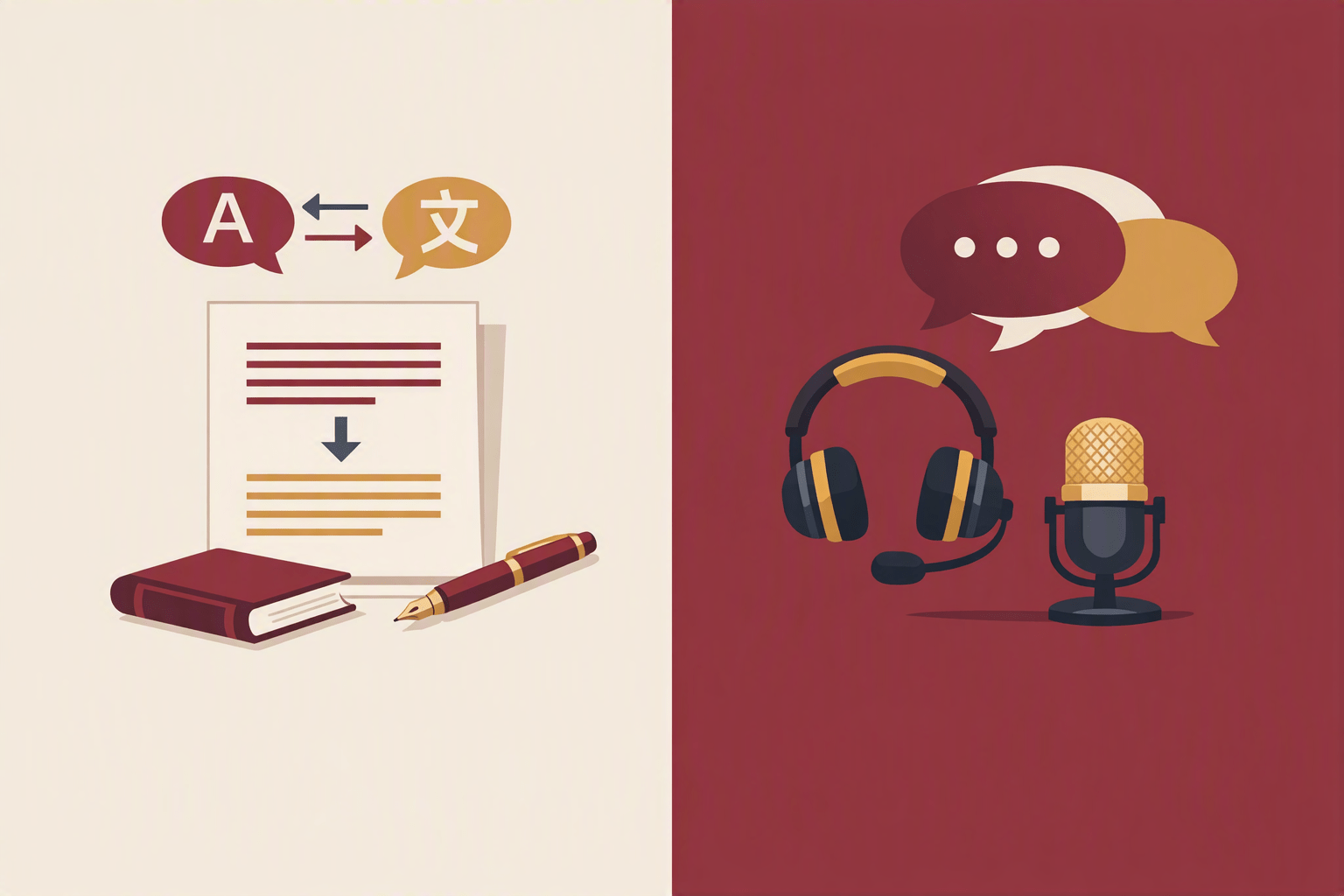
The terms are often mixed up, but they do not mean the same thing. A sworn translator translates written documents: birth certificates, diplomas, criminal record extracts, judgments, articles of association, powers of attorney and so on. A sworn interpreter works orally: during conversations, hearings, appointments, statements or ceremonies.
Sometimes you need both. If you want to get married in Belgium and have to submit foreign documents, you may need a sworn translation of a birth certificate or similar document, as well as a sworn interpreter during the civil ceremony. If you are involved in an official procedure abroad, you will usually need to appoint a local sworn or officially recognised interpreter on site, since the rules differ from country to country.
Why professional interpreting also requires trust
A sworn interpreter often works in situations that are personal, official or stressful. A wedding ceremony may be joyful; a police interview or a city hall appointment less so. A notarial deed can have far-reaching consequences, while a practical driving test calls for instructions that are clear and unambiguous. In all these settings, the interpreter must remain professional, discreet and neutral.
Sworn interpreting: mandatory when the law requires it
In such cases, appointing a sworn interpreter is not an optional add-on, but a necessary condition for the procedure to run correctly. The competent authority must be sure that everyone understands what is being said, that statements are rendered accurately and that decisions or legal acts cannot later be called into question because of a language issue.
Whether it concerns a civil marriage in Belgium, a court hearing, a notarial appointment, a practical driving test or an important administrative procedure: when every word counts, you need a sworn interpreter.
Need a sworn interpreter?
Do you need a sworn interpreter in Belgium for an official appointment, signing, procedure, interview, ceremony or practical driving test? Send us the practical details and the required language combination as soon as possible. We will be happy to check what is possible and make sure the interpreting assignment is scheduled correctly and professionally.